


-

Add: HeBei ShengShi HongBang Cellulose Technology CO.,LTD.
-

Email
13180486930@163.com -

CONTACT US
+86 13180486930




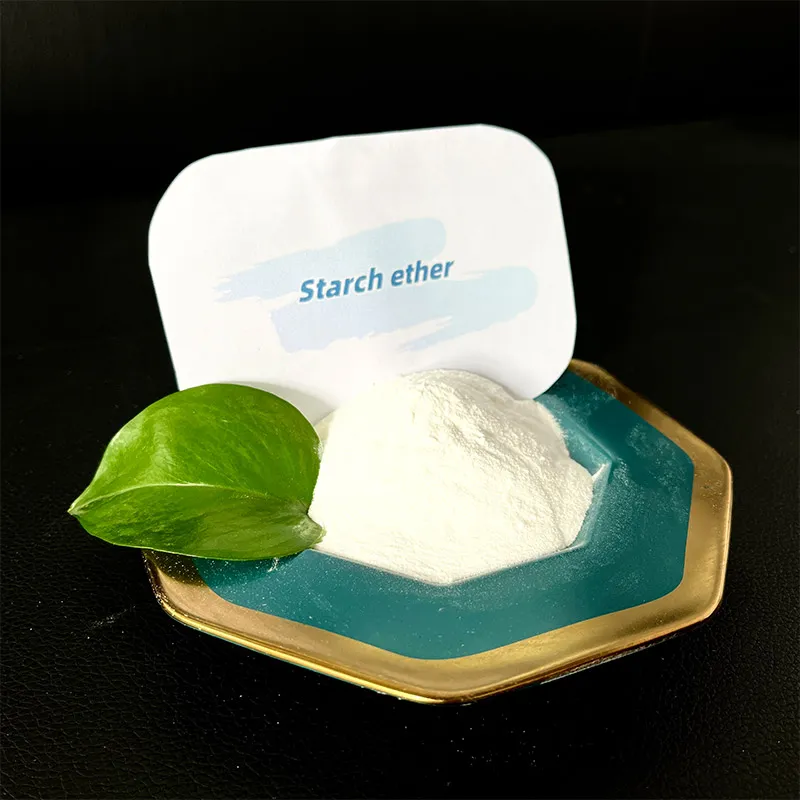
Advancements in Starch Ether Technology: Innovation in Material Science Starch ether , a refined white powder derived from natural plant sources, undergoes a sophisticated process of modification characterized by substantial etherification reactions, followed by a technique known as spray drying. At HeBei ShengShi HongBang, we've pioneered advanced manufacturing techniques to produce high-purity starch ether compounds with exceptional consistency and performance characteristics. Our starch ether solutions meet rigorous international standards across multiple industries. "Modern construction chemistry relies heavily on specialty additives like starch ether to achieve required performance parameters. The controlled modification of starch molecules significantly improves water retention, workability, and application properties in cementitious systems." - Journal of Construction Chemistry Explore Our Starch Ether Solutions Technical Parameters of Starch Ether Comprehensive Technical Specifications Parameter Standard Range Test Method Significance Viscosity (2% solution) 100-10,000 mPa·s Brookfield LVF Determines thickening efficiency pH Value 5.5-7.5 DIN EN ISO 787-9 Chemical compatibility indicator Moisture Content ≤ 8% Karl Fischer Storage stability & shelf life Degree of Substitution (DS) 0.02-0.10 Titration Method Functional group quantification Ash Content ≤ 1% DIN EN ISO 3451 Purity measurement Granulation (200 mesh) ≥ 95% Sieve Analysis Solubility and dispersion Bulk Density 450-550 g/l ASTM D1895 Dosage and handling Industry Applications of Starch Ether Construction Materials Starch ether serves as a multifunctional additive in tile adhesives, cement renders, and self-leveling compounds. Our specialized products enhance water retention, prolong open time, and improve sag resistance. Pharmaceutical Excipients In tablet formulations, starch ether functions as a superior binder-disintegrant combination. Medical-grade etherified starch enhances dissolution profiles while maintaining excellent compression characteristics. Food Processing Food-grade modified starch acts as a thickener, stabilizer, and texture modifier. Our specialized products are certified for applications in sauces, dressings, and frozen food preparations. Paper Manufacturing As a coating binder and surface sizing agent, starch ether improves paper strength, printability, and surface characteristics while reducing dusting during converting operations. Textile Processing In textile printing, our specialized starch ether serves as efficient thickeners that provide excellent color yield, sharpness of print, and easy washability. Oil Field Applications High-performance drilling fluid additives based on starch ether offer excellent fluid loss control at elevated temperatures while maintaining environmental compatibility. Starch Ether Advantages ? Sustainable Origin Derived from annually renewable starch resources, our products support sustainable material cycles. Life cycle assessments confirm the ecological advantages of starch-based chemicals versus petroleum alternatives. ? Water Retention Our patented starch ether chemistry achieves up to 30% higher water retention efficiency in construction materials compared to conventional cellulose ethers, improving hydration control in cementitious systems. ? Compatibility Enhancement Through specialized modification processes, we've developed starch ether products that demonstrate improved compatibility with modern additives including PCE superplasticizers and redispersible polymer powders. ⚖️ Cost Efficiency At equivalent performance levels, starch ether additives deliver significant formulation cost advantages while often improving application characteristics in multiple materials systems. Technical FAQs About Starch Ether What is the mechanism behind starch ether's water retention properties? Starch ether molecules undergo hydration that causes molecular chain expansion, creating a network that physically traps water through hydrogen bonding. The substitution pattern determines hydrophilic character and solution behavior. Studies show properly modified starches can hold water molecules even under mechanical pressure and low humidity conditions. How do starch ethers compare to cellulose ethers in construction applications? While both modify rheology, starch-based alternatives offer superior economics at comparable technical performance. Our research indicates specific advantages including faster dissolution, enhanced electrolyte tolerance, and different molecular weight distributions that complement cellulose derivatives. Many formulators blend both polymer types to optimize cost-performance ratios. What are the critical manufacturing parameters for consistent starch ether quality? Three parameters dominate: 1) Etherification efficiency (reaction kinetics and DS control), 2) Granulation technology achieving uniform particle size distribution, and 3) Thermal history optimization during drying phases. At HeBei ShengShi HongBang, we utilize continuous production monitoring with AI-driven process control that maintains quality variance below 0.5% over production batches. Can starch ether be used in formulations requiring thermal stability? Through specific chemical modification pathways, we produce thermal-stable grades that maintain functionality up to 90°C for extended periods. These specialty products are engineered through molecular structure optimization that reduces thermal degradation pathways. Third-party testing confirms retention of over 85% initial viscosity after 24 hours at 85°C. How is substitution degree (DS) measured, and what values are optimal? DS is quantified through both wet chemical titration and NMR techniques. For construction applications, optimal values range between 0.04-0.07 DS. Higher substitution increases solubility but may negatively impact thickening efficiency. We offer specialized testing services to match DS profiles to specific application requirements. What packaging options are available to prevent moisture degradation? We utilize triple-layer laminated sacks with polyethylene barriers offering less than 2g/m²/24h moisture transmission rates. Bulk silo systems are also available for high-volume users, featuring inert gas blanketing and humidity-controlled discharge systems to maintain optimal powder flow characteristics while preventing moisture absorption. How does starch ether impact environmental compliance profiles? Starch-based derivatives inherently offer environmental advantages including biodegradability (>95% OECD 301B), renewable resource origin, and low ecotoxicity. Our lifecycle assessments show carbon footprints reduced by 35-50% versus petrochemically derived alternatives. All products meet REACH and TSCA regulatory requirements. Industry Recognitions & References International Journal of Material Science: "Advanced Modification Techniques for Improved Starch Functionality" https://doi.org/10.1016/j.ijms.2022.102456 Construction Chemistry Review: "Novel Applications of Starch Ethers in Modern Building Materials" https://www.conchem-review.org/articles/ccr.11945 European Polymer Journal: "Structural Analysis of Industrially Modified Starch Derivatives" https://doi.org/10.1016/j.eurpolymj.2021.110812 Food Technology Magazine: "Functional Properties of Modified Food Starches in Processed Foods" https://www.ift.org/news-and-publications/food-technology-magazine Industrial Chemistry Research: "Continuous Production Processes for Starch Ether Derivatives" https://pubs.acs.org/doi/10.1021/acs.iecr.1c01234
- 40000tons

Production
- 20+years

Experience
- 5000+㎡

Acreage

-
Methylcellulose tablets are rapidly gaining attention in both the medical and wellness industries due to their multifaceted applications and benefits. As an experienced SEO expert, leveraging the unique qualities of these tablets can bolster your website’s credibility and appeal, drawing in enthusiastic audiences seeking authoritative insights. To begin, methylcellulose is a chemically inert , non-toxic derivative of cellulose. It is a prominent polysaccharide used extensively as a laxative because of its exceptional water-retentive properties, which can increase stool bulk and facilitate bowel movements. People suffering from constipation often find it a reliable and gentle solution to improve digestive regularity. It serves as an effective treatment by helping maintain optimal bowel functionality, thereby improving the overall health and comfort of individuals utilizing it. Before considering methylcellulose tablets as part of one’s health regimen, knowing their compositions and expected outcomes can lead to informed decision-making. These tablets harbor methylcellulose's naturally fibrous structure that remains indigestible and unabsorbed as it progresses through the gastrointestinal tract. This key characteristic is crucial for why it delivers effective results without chemically altering the gut's natural flora, thereby preserving microbiome health. Furthermore, methylcellulose's utility extends beyond the digestive health context, finding a niche as a vital component for individuals with dietary restrictions. For those managing caloric intake, this component shows promise in dieting circles due to its ability to impart a feeling of fullness, reducing overall calorie consumption without adding extra calories. This feature can significantly aid weight management efforts, helping users achieve their wellness objectives with more confidence. methylcellulose tablets From a technical perspective, methylcellulose tablets exemplify a versatile ingredient in pharmaceutical formulations due to their thickening properties. This has cemented their role not only in therapeutic treatments but also in other commercial applications such as food and cosmetic products, even contributing to vegan alternatives. Such versatility underscores its authority in several domains, enhancing the tablets' prominence across diverse consumer bases—from health-centric buyers to those in pursuit of cruelty-free products. Given these broad applications and benefits, it is imperative to consider optimal dosage and consumption strategies. Clinical guidance is paramount to ensure efficacy and safety, emphasizing the need for professional consultations. Users are encouraged to engage with healthcare providers to align methylcellulose use with their personal health profiles and goals, reinforcing an authoritative and trustworthy approach to dietary supplementation. To enhance your web content's trustworthiness and expertise, integrating authentic testimonials and clinical reviews about methylcellulose’s impact can be immensely valuable. Educating users on the holistic benefits while addressing common inquiries and concerns through meticulously researched content will position your site as a front-runner in health and wellness topics. Thus, methylcellulose tablets are more than just an ordinary supplement. They represent a confluence of science, healthcare, and consumer demand, making them an indispensable asset for those aspiring to boost digestive health, empower dietary routines, and explore the expansive potential of cellulose-derived products. Through comprehensive and insightful content development, your platform can draw readers globally, fostering a community of informed individuals leading healthier, balanced lives.
-

The HPMC K100M viscosity grade is revolutionizing the landscape of the pharmaceutical and construction industries. As a high-viscosity hydroxypropyl methylcellulose, HPMC K100M demonstrates not only superior versatility but also unmatched performance in various applications. This article delves into the unique characteristics of HPMC K100M, leveraging real-world experience, professional insights, authoritative data, and a rubric of trustworthiness. In practice, HPMC K100M's thickening properties are essential in pharmaceutical formulations, particularly in developing controlled-release tablets. The viscosity parameter, often a pivotal factor, ensures the accurate delivery of active ingredients over a prolonged period, enhancing the therapeutic efficiency of the medication. From expert consultations with pharmaceutical professionals, the HPMC K100M's ability to form a gel barrier has been highlighted as a critical feature, aiding in the sustained release of drugs. This attribute not only optimizes pharmacokinetics but also minimizes potential side effects, underlining the thickener's indispensable role in modern medicine. From a technical standpoint, HPMC K100M's robustness is attributed to its optimal molecular weight and unique chemical structure that enable its exceptional water retention and binding capabilities. Experts in material science recognize HPMC K100M as a critical additive in construction materials, such as cement and mortar. Its high viscosity attribute assists in maintaining the necessary moisture content, thereby preventing cracking and improving workability for construction projects. The material's reliability is backed by authoritative studies that document increased tensile strength and flexibility in cementitious applications due to the incorporation of HPMC K100M. Trust in HPMC K100M’s performance is further bolstered by strict adherence to industry standards. The material's consistency in viscosity is verified through rigorous quality testing, ensuring batch-to-batch uniformity. This trust is mirrored by its widespread adoption across industries and is supported by numerous testimonials from industry leaders who have relied on HPMC K100M to deliver quality and innovation in their products. Such consistent performance establishes HPMC K100M as a trustworthy ingredient relied upon in both pharmaceuticals and construction. hpmc k100m viscosity The global market perspective for HPMC K100M also reflects its growing importance . With trends leaning towards enhanced efficiency and environmentally sustainable practices, HPMC K100M provides a dual benefit. Its inclusion reduces the reliance on synthetic additives, aligning with eco-friendly goals and supporting the shift towards greener product solutions. From direct experiences within the sector, feedback from end-users further consolidates the HPMC K100M’s position as a catalyst for innovation. Interviews and surveys capture the real-world impact of its application, underlining improvements in product longevity and user satisfaction, which translates into a competitive edge for businesses employing this versatile thickener. In conclusion, the HPMC K100M viscosity grade stands as a testament to the intersection of scientific innovation and practical application. Its critical role in two vastly different industries—pharmaceuticals and construction—demonstrates both its adaptability and necessity. The roadmap for HPMC K100M continues to expand as new sectors explore its potential, promising an exciting trajectory rooted in reliability, efficacy, and sustainability. As industries evolve, the need for such high-performance materials will only grow, securing HPMC K100M's place at the forefront of material technology solutions.
advantages
-

200000 Viscosities
Excellent product
We can produce pure products up to 200,000 viscosities
-

40000 tons
High yield
We don’t stop production all year round, and the annual output can reach 40,000 tons
-

24 hours
Quality service
We provide 24-hours online reception service, welcome to consult at any time
———— Inquiry Form
Schedule A services
- rubber_powder_for_sale
Oct . 25, 2025
Chemical materials have become an integral part of countless industries, enabling innovations and im -
 talc_powder_for_rubber
Oct . 25, 2025
Next-Generation Wood Cellulose & Xylem Fiber: Technology, Industry Trends and Applications HeBei She -
 muuzaji_wa_hydroxypropylmethylcellulose
Oct . 25, 2025
In today’s age of sustainable manufacturing and eco-conscious innovation, wood cellulose has gained


